Important Update for New York Auto Cases
Important Update for New York Auto Cases | Bennett Bricklin & Saltzburg LLC
New York has just enacted sweeping reforms to its No-Fault automobile insurance law as part of the FY2027 Enacted Budget, signed into law on May 27, 2026. These changes represent the most significant overhaul of New York's auto tort system in a generation, and will have a direct impact on how automobile accident claims are litigated going forward.
Here are the key changes practitioners and their clients need to know:
· Tightened "Serious Injury" Threshold
The statutory definition of "serious injury" has been significantly clarified. Pain-and-suffering and emotional distress damages are now reserved for claimants who can objectively demonstrate a qualifying serious injury. Critically, the "90/180 rule" — which previously allowed recovery based on limitations to daily activities during the first 180 days after an accident — has been repealed.
· Fault Determined Before Threshold
Juries will now be required to determine fault before considering whether a plaintiff meets the serious injury threshold — a procedural change that will reshape how these cases are tried.
· Modified Comparative Negligence
New York is joining 28 other states by limiting the liability of defendants who are less than 50% at fault to only the damages they actually caused. This is a fundamental shift from the current pure joint-and-several liability framework.
· Caps on Damages for Unlawful Conduct
Damages will be capped for drivers who were engaged in criminal behavior at the time of an accident — including uninsured motorists, drunk drivers, and those committing a felony.
· Stronger Anti-Fraud Measures
The budget expands the definition of fraudulent insurance acts to include anyone who "hires, requests, encourages, orchestrates, or invites" another to stage a motor vehicle accident — not just the driver — and enables criminal penalties for organizers of staged crashes.
These reforms will significantly affect how automobile injury claims are evaluated, negotiated, and tried in New York. Insurers and defense counsel will need to adapt their strategies accordingly.
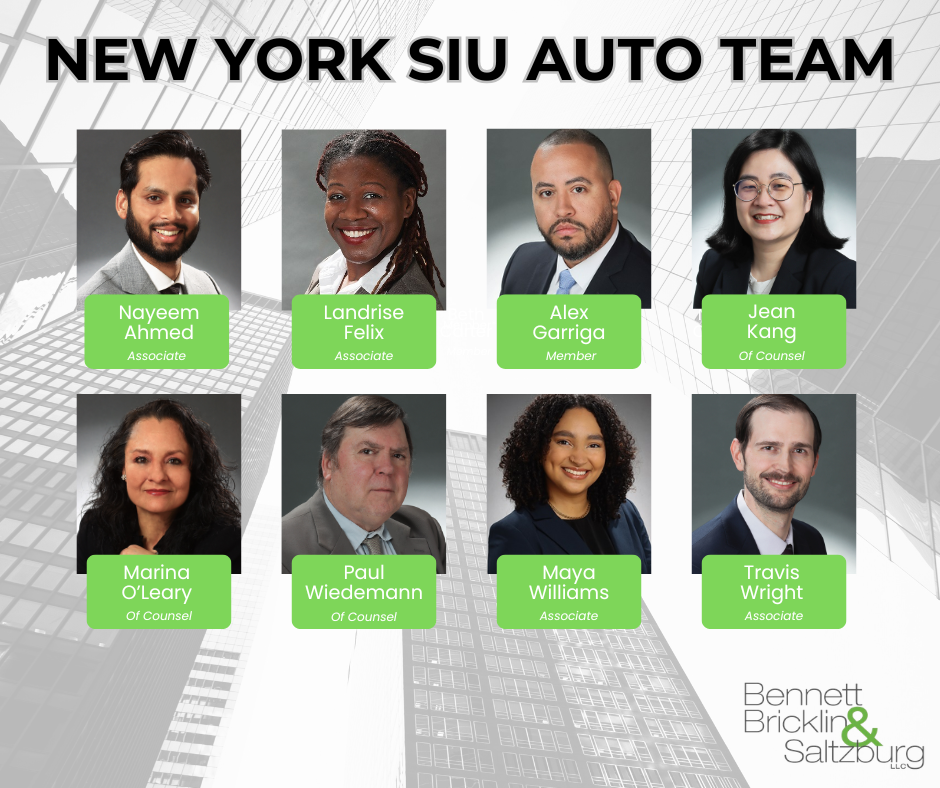
If you have questions about how these changes may affect your pending or future automobile cases, please contact Alex Garriga at Bennett Bricklin & Saltzburg LLC.